
 Credible Source
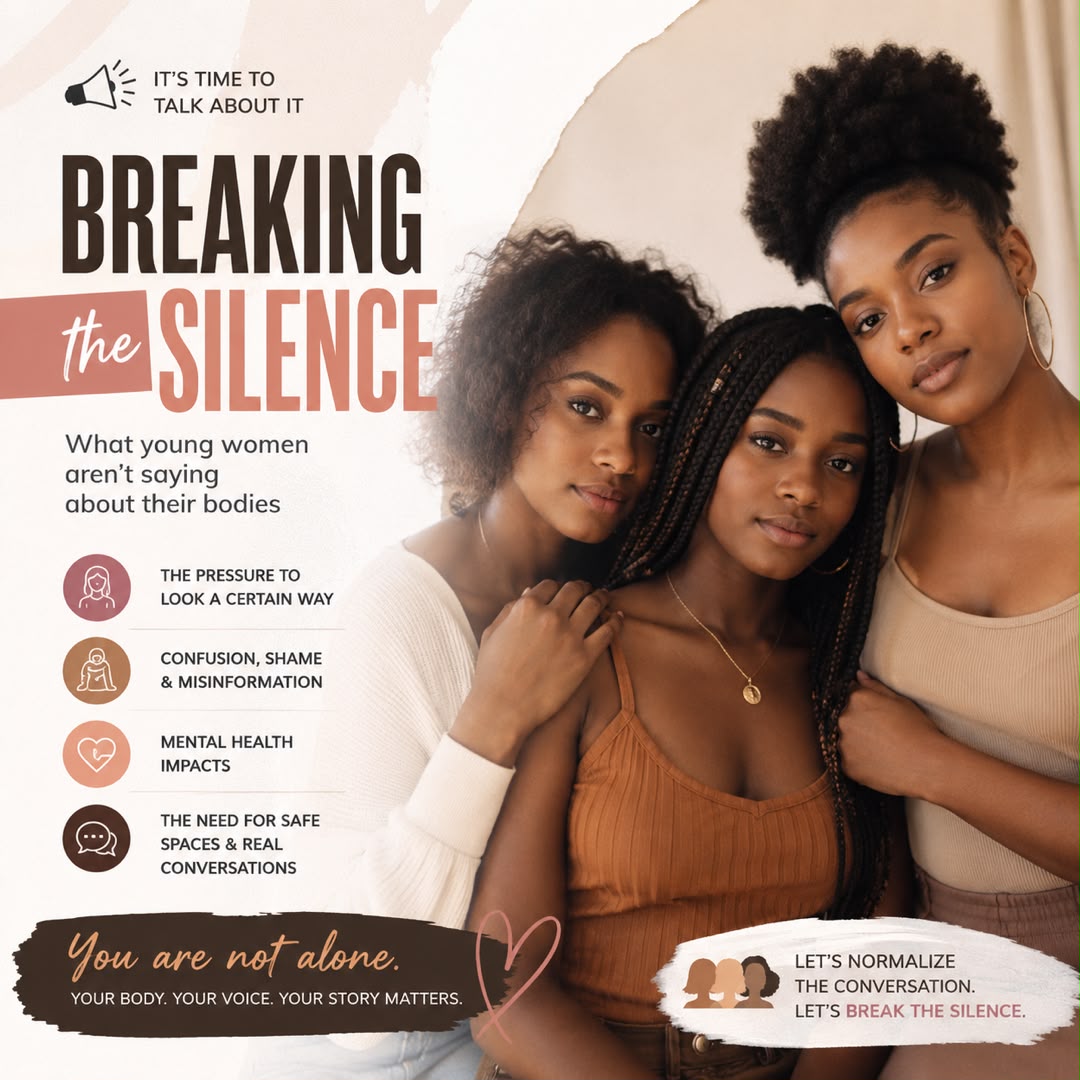

In many societies, conversations about women’s bodies remain wrapped in silence spoken in whispers, avoided in public, and often misunderstood even in private. For young women especially, this silence is not accidental; it is learned, reinforced, and deeply rooted in culture, fear, and stigma.
From the moment girls begin to grow, they are subtly taught that their bodies are something to manage quietly. Topics like menstruation, sexual health, body image, and reproductive choices are rarely discussed openly. Instead, they are cloaked in shame, coded language, or outright avoidance.
But beneath that silence lies a reality that demands attention.
The Weight of Unspoken Truths
Many young women navigate their bodies with limited information. Without proper education or safe spaces to ask questions, myths and misconceptions take root. A girl may experience her first period without understanding what is happening. Another may rely on inaccurate advice about contraception, putting her health at risk.
This lack of open dialogue creates more than confusion it creates vulnerability.
Studies and reports consistently show that silence around women’s bodies can lead to delayed healthcare, unsafe practices, and emotional distress. In environments where asking questions invites judgment, many young women simply choose not to ask at all.
Shame as a System
The silence is not just personal it is structural.
Cultural expectations, religious interpretations, and societal norms often frame women’s bodies as something to control rather than understand. Conversations about sexuality are moralized, and reproductive choices are politicized. As a result, young women are left navigating deeply personal experiences within systems that rarely center their voices.
Even within healthcare spaces, stigma can persist. Some young women hesitate to seek help out of fear of being judged, dismissed, or misunderstood. This reinforces a cycle where silence becomes both a shield and a barrier.
The Emotional Cost
Beyond physical health, the silence carries emotional consequences.
Body image struggles, anxiety, and feelings of isolation are common among young women who feel they cannot speak openly. When natural bodily experiences are treated as taboo, they can begin to feel abnormal even shameful.
As research shows, body-related shame often starts early, shaped by how society talks or refuses to talk about women’s bodies. (abc.net.au)
Breaking the Pattern
Change begins with conversation.
Creating safe, judgment-free spaces where young women can speak openly is essential. Education both formal and informal plays a powerful role in replacing myths with facts. Families, schools, media, and healthcare providers all have a part to play in normalizing these discussions.
When young women are empowered to understand and talk about their bodies, the impact extends far beyond health. It builds confidence, autonomy, and the ability to advocate for themselves.
In fact, initiatives in Nigeria and beyond show that when girls are encouraged to speak openly, they are more likely to report abuse, seek care, and support others. (UNDP)
A New Narrative
Breaking the silence is not just about speaking louder it’s about changing what is heard.
It means shifting from shame to knowledge, from judgment to empathy, and from secrecy to support. It means recognizing that conversations about women’s bodies are not inappropriate they are necessary.
Because when young women are given the space to speak freely, they don’t just find their voices they reshape the narrative for generations to come.


 Dr. Adebunmi Adeola Akinbo