
 Dr. Adebunmi Adeola Akinbo

When we discuss the preservation of history, our minds naturally drift to the physical remnants of the past: the weathered timber of a century-old railway estate, the industrial ironwork of an old locomotive, or the carefully archived blueprints of a bygone era. For over three decades, LEGACY 1995 (The Historical and Environmental Interest Group of Nigeria) has stood as the guardian of these monuments, most notably through the meticulous restoration of Jaekel House and the ongoing revitalization of the Old Running Shed at Ebute Metta, Lagos.
Yet, a vital clue to the organization’s true mission lies in the often-overlooked middle letter of its identity: E for Environmental.
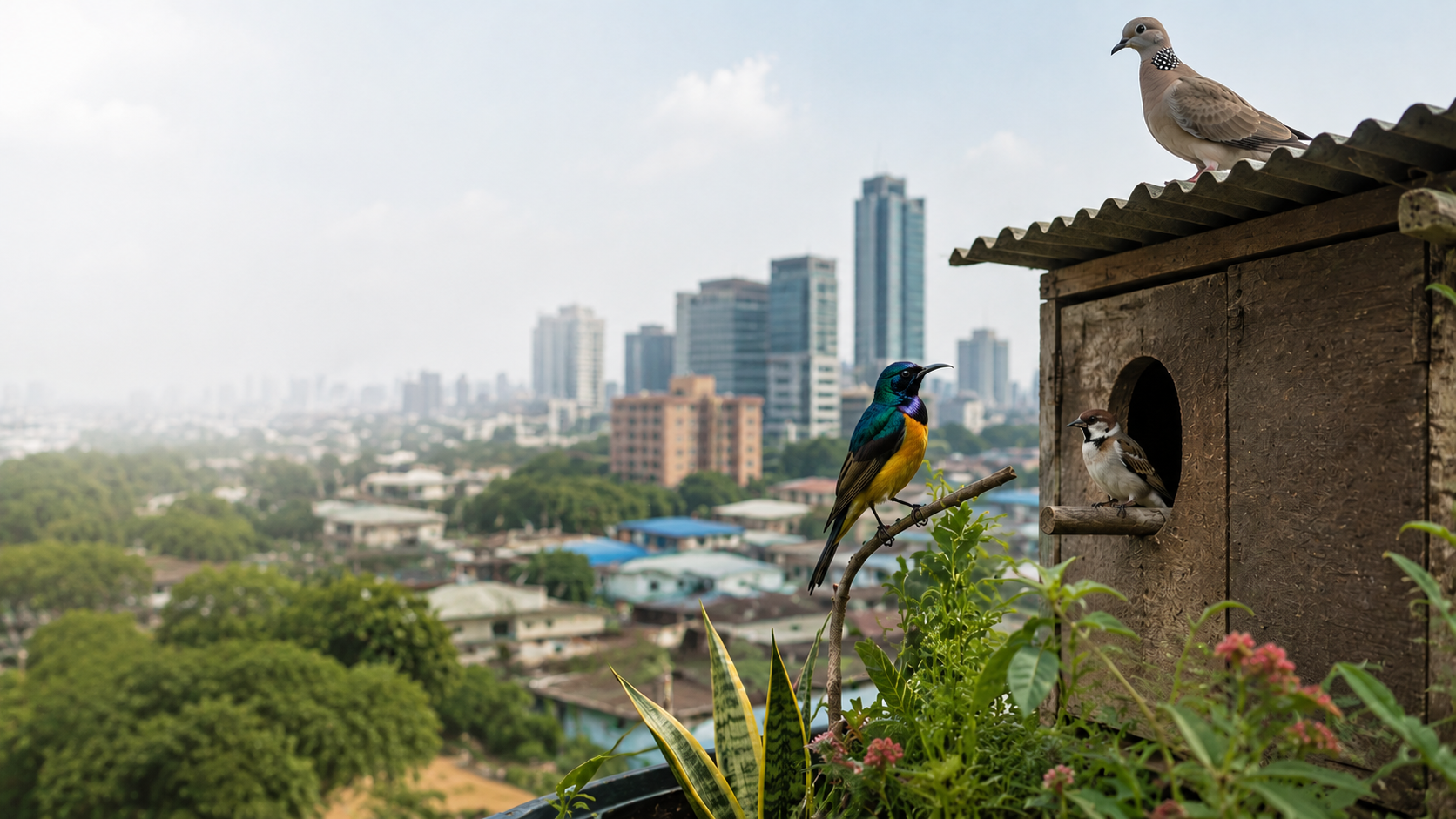
True heritage preservation cannot be decoupled from the living landscape that anchors it. In a rapidly expanding mega-city like Lagos, where concrete and steel relentlessly claim the horizon, the historic compounds of our industrial past have unintentionally transformed into something extraordinary: micro-sanctuaries for nature. Among these, the presence of urban birdlife—and the practice of bird watching—stands as a powerful testament to the ecological health of our heritage spaces.
The “Secret Gardens” of the Railway Compound
The colonial-era planning of the Nigerian Railway Corporation (NRC) estate left behind a priceless gift: expansive green spaces, mature fruit-bearing trees, and unpaved, porous terrain. While the surrounding city grew denser, hotter, and louder, these historic enclaves maintained a unique microclimate.
Step onto the grounds of Jaekel House or look up from the perimeter of the Old Running Shed, and you will find a canopy that has stood for over a century. These old-growth trees provide vital nesting sites, shelter, and a continuous food supply for both resident avian populations and weary migratory birds navigating international flyways. They are, in essence, the “secret gardens” of Lagos—islands of biodiversity in a sea of asphalt.
Birds as the Ultimate Ecological Thermometer
Bird watching is frequently perceived as a passive, quiet leisure hobby. In reality, it is a critical diagnostic tool for urban conservation. Birds are apex environmental indicators; they are the ultimate “ecological thermometer.”
When the diversity of bird species in a specific area drops, it is an immediate warning sign that the local ecosystem is under stress. A healthy, vocal bird population tells us that the soil is healthy, the insect population is balanced, and the flora is thriving.
By observing and cataloging the avifauna within historical sites, we aren’t just identifying beautiful creatures—we are auditing the health of our urban environment. Furthermore, preserving these birds protects the intangible heritage of the space. The historic atmosphere of our rail heritage is profoundly enriched when the mechanical memories of iron and steam are accompanied by the natural soundscape of morning bird calls.
A Blueprint for Action: The Path Forward
To fully realize the environmental half of its founding mandate, LEGACY 1995 is uniquely positioned to weave avian conservation directly into the fabric of its cultural programming:
- Eco-Tourism & Dual-Narrative Tours: Heritage tourism can be expanded to include guided morning bird walks along the railway compound before the midday heat sets in. Visitors who come for the history will stay for the nature, experiencing a holistic narrative of how human industry and natural ecosystems coexisted.
- Community Science & School Outreach: The green spaces can serve as open-air classrooms. Hosting local youth groups and students for basic bird-watching workshops fosters an early appreciation for ornithology and urban biodiversity, proving that conservation isn’t an abstract concept meant only for distant national parks—it happens in our own neighborhoods.
- Canopy Protection as Policy: As we push forward with structural restorations and site activations, habitat preservation must remain a core metric. Protecting old-growth trees from arbitrary felling during modernization efforts ensures that the historical canopy remains intact for generations of birds—and humans—to come.
The Living Legacy
Heritage is not a collection of static, silent walls preserved in a vacuum. It is a living, breathing tapestry where the built environment and the natural world are inextricably linked.
As LEGACY 1995 continues to breathe new life into the historic spaces of Ebute Metta, the quiet rustle of wings in the canopy reminds us of our broader responsibility. By protecting the habitats that invite birdlife back into the heart of the city, we do more than save old buildings. We ensure that our history remains vibrant, our urban air remains breathable, and the historic sanctuaries we pass on to the next generation are still alive and singing.


 admin