 admin
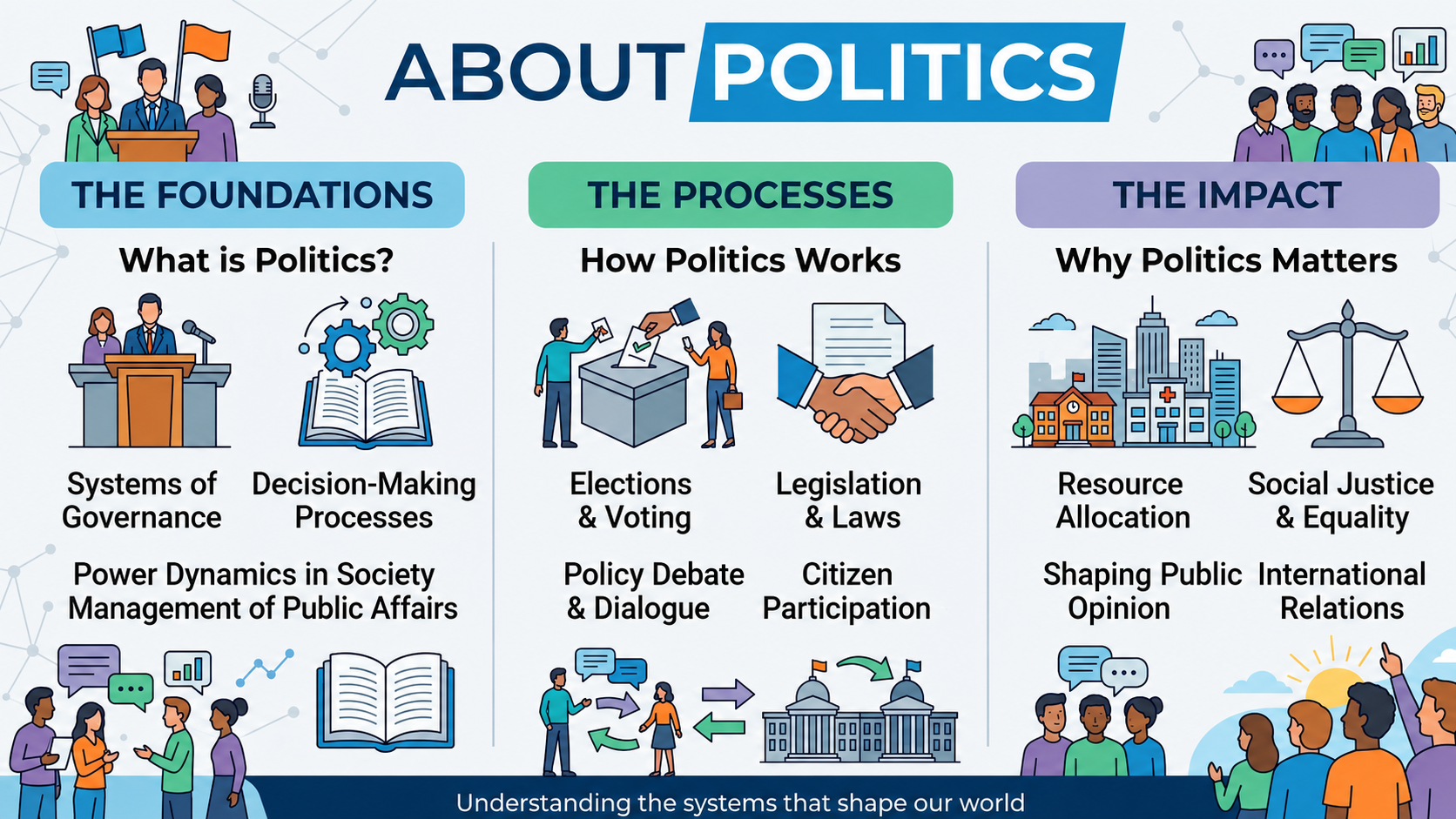

Politics is often a polarized topic, yet it remains the fundamental mechanism through which societies organize themselves, make decisions, and resolve conflicts. At its core, politics is about how power is distributed and used to manage public affairs and allocate resources. Here is a closer look at the essential elements of political systems.
The Foundations: What is Politics?
Politics is more than just current events; it is built on established structures and dynamics that dictate how a society functions.
- Systems of Governance: This encompasses the formal structures of risk, such as democracies, monarchies, or authoritarian regimes, which define who holds power and how they may use it.
- Decision-Making Processes: Politics provides the framework for how a community makes collective binding choices, from local town halls to international treaties.
- Power Dynamics & Management: It involves the continuous negotiation of power between different groups in society and the responsible management of public assets and services.
The Processes: How Politics Works
The machinery of politics relies on participation and established procedures to function effectively and maintain legitimacy.
- Elections and Voting: In many systems, this is the primary way citizens exert influence, choosing representatives to act on their behalf.
- Legislation and Laws: Politics is the process through which societal values and needs are translated into enforceable laws and regulations.
- Dialogue and Participation: Beyond voting, politics requires ongoing debate, lobbying, and civic activism to ensure that a diverse range of voices and opinions are heard in the policy-making process.
The Impact: Why Politics Matters
Ultimately, political activity has a profound effect on the daily lives of citizens and the future of nations.
- Resource Allocation: Politics decides how public funds are spent—on education, healthcare, infrastructure, or defense—directly impacting quality of life.
- Social Justice and Opinion: Through policy and rhetoric, politics shapes public opinion and dictates the extent to which a society strives for equality and protects the rights of its members.
- International Relations: In a globalized world, domestic political decisions influence a nation’s standing on the world stage, affecting trade, security, and global cooperation.





Hi, great website.